Annual Report 2024 - 2025
Introduction
Agriculture is a critical sector in Uganda’s economy. It employs the majority of Uganda's workforce, with estimates of up to 70% of the population, particularly in rural areas, working in the sector. In addition, agriculture contributes significantly to Uganda's Gross Domestic Product (GDP), accounting for approximately 24% of the total GDP. Moreover, provides the foundation for food and nutrition security.Despite its importance, agricultural production and productivity remains low due to reliance on rain-fed agricultural production, limited agro-input use, and traditional methods and equipment for cultivation. As a result, over 40% of the population in Uganda suffers from food insecurity annually. Food insecurity can be overcome by doubling the food production to meet the rapidly growing population. However, this additional food will have to be produced on existing agricultural land that is often degraded with poor soil fertility. Moreover, smallholder farming systems that produce food are susceptible to climate change. In addition, limited knowledge on improved production practices, coupled with limited human capital, constrain agricultural production. Thus,enhancing agricultural production and productivity will require human capital investment and support for national development as envisaged under Uganda’s National Development Plan (NDP4). Therefore, there is need to build the capacity of technical and professional personnel to enhance the capacity of farmers and other stakeholders along various agricultural value chains for sustainable agricultural production.
There is a strong link between environment and sustainable agriculture. Environmental issues are anchored in the global agenda such as the Sustainable Development Goals (SDGs) and Convention on Biological Diversity (CBD). They are also addressed under Uganda’s Constitution, National Environment Policy 1994, National Forest Policy 1995, Vision 2040, National Biodiversity Strategy and Action Plan (NBSAP), and National Development Plan (NDP4). Major environmental and natural resources challenges confronting Uganda and most developing countries include climate change, forest and wetland degradation, poor waste management, water and air pollution, declining soil fertility, and loss of biodiversity. Uganda’s rapid population growth (estimated at 2.9%), coupled with increasing impacts of climate change will accelerate environmental and natural resources degradation, if unchecked.
The West Nile region faces several agricultural and environmental challenges. The Faculty of Agriculture and Environmental Science (FAES) at Muni University was established in 2020 to provide human and scientific capacity to address these challenges at the local, national, and regional levels. FAES has two degree programs – Bachelor of Science in Agriculture (BSc. Agric.) and Bachelor of Science in Environment and Natural Resources (BSc. ENR).
Vision
To be a centre of excellence in agricultural and environmental science education, research, and innovation for community empowerment and transformation.
Mission
To train competitive agricultural and environmental scientists for societal transformation.
Objectives
- To produce globally competitive graduates in the agricultural and environmental sciences.
- To conduct fundamental cutting-edge and applied research.
- To promote short-term and medium-term skills development courses.
- To contribute to agricultural innovations and environmental conservation for sustainable development.
Administrative Structure
The administrative structure of the Faculty of Agriculture and Environmental Science consists of the Dean and Heads of Departments, which are elective positions.
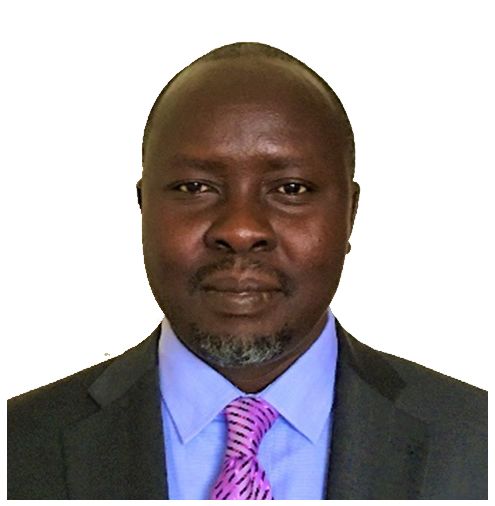
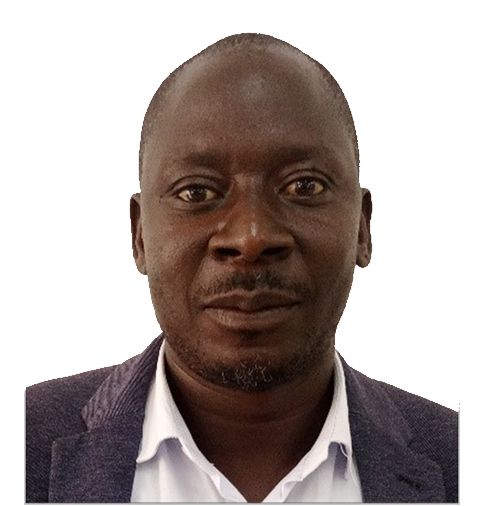
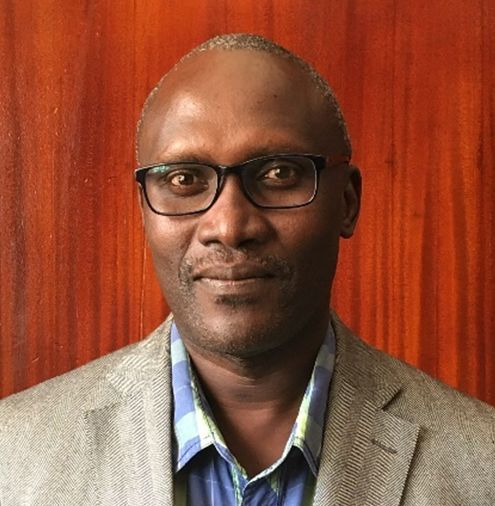
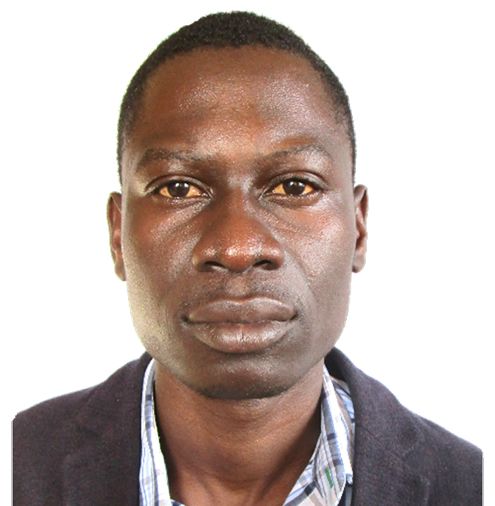
The current Dean is Dr. Alfred Alumai. He is assisted by three (3) Heads of Departments as follows:
- Dr. Alex Abaca | Head of Department for Crop Science.
- Dr. Robert B. Onzima | Head of Department for Animal Science.
- Dr. Philip I. Omwene | Head of Department for Environment and Natural Resources.
Programmes Offered
Bachelor of Science in Agriculture
The Bachelor of Science in Agriculture (BSc.Agric.) is a 4-year degree programme. It aims toproduce professionals with the ability understand, analyse, synthesize, and integrate key issues in agriculture, and design targeted solutions that contribute towards stimulating and maintaining a vibrant agriculture sector capable of significantly reducing poverty among farming communities and ensuring food and nutrition security.
The programme will produce competent professionals in the agricultural sciences who are be able to:
- Apply desirable agricultural knowledge, skills, values, and attitudes for efficient service delivery.
- Be creative and innovative in the process of analysing, interpreting, and identifying solutions to challenges in the agriculture sector.
- Manage agricultural/farm enterprises profitably.
- Carry out further research in the field of agriculture and other related fields.
Upon completion of programme the graduatesshould be able to:
- Demonstrate technical competence in the science and practice of agriculture.
- Offer effective leadership to manage agriculture-related enterprises.
- Demonstrate in-depth knowledge for professional careers as scientists, technical advisors, entrepreneurs, marketers or financial managers.
- Integrate knowledge acquired through coursework with fieldwork, internship placement, and outreach activities be immediate assets to employers.
The BSc. Agric. programme is practical-oriented. Item braces both the science and practice for food production, as well as offers students valuable “hands-on” skills in farm management, marketing, and community outreach.
Bachelor of Science in Environment and Natural Resources
The Bachelor of Science in Environment and Natural Resources (BSc. ERM) is a 3-year degree programme. The BSc. ERM programme combines key aspects of environmental science, forestry, wetlands, and wildlife management that are key for professionals in the environment and natural resources sector. It aims to produce professionals with the ability to analyse, understand, and integrate the key causes of the current and emerging environmental and natural resources challenges and develop interventions geared towards creating green economies, thus contributing to sustainable development.
The programme will produce competent professionals in environment and natural resources disciplines who are be able to:
- Apply basic concepts and principles in environment and natural resources sciences.
- Develop knowledge and skills in environmental and natural resources assessments, planning and monitoring.
- Develop problem-solving skills through use of inter-disciplinary approaches integrating environment, natural resources, agriculture, livelihoods and development.
- Provide skills to effectively disseminate environmental and natural resources information to various audiences including local communities and policy makers.
Upon completion of programme the graduates should be able to:
- Demonstrate application of environmental and natural resources assessments, planning and monitoring.
- Apply interdisciplinary approaches in solving environmental and natural resources problems.
- Design and conduct independent research on environment and natural resources issues.
- Demonstrate effective oral, visual, and written communication skills.
The BSc. ERM programme is designed to produce environmental and natural resources professionals equipped with specialized knowledge, skills, attitudes, and competences for addressing current and emerging issues in environment and natural resources sectors.
Research Focus
The Faculty of Agriculture and Environmental Science (FAES) undertakes basic, applied, and action research in the broader areas of agricultural sciences, environmental sciences, natural resources conservation and management. The research focuses on innovation and technologies that lead to enhancing food and nutrition security, enhancing income, adapting to and mitigating effects of climate change, and enhancing environmental sustainability. The research efforts are geared towards improving livelihoods and overall development of communities that Muni University serves. As such, FAES has positioned itself to conduct research using cutting-edge tools, such as biotechnology, bioinformatics, and genomics.
A list of research projects implemented by members of staff in FAES during FY 2024/2025 is presented in Table 1. The research grants contribute to the overall research focus of FAES.
Table 1. Summary of research projects implemented by staff in the Faculty of Agriculture and Environmental Science during FY 2024/2025.
S/N | Contact Person(s) | Project/Research Area |
|---|---|---|
1 | Assoc. Prof. Clement Okia Dr. Philip Omwene Mr. Richard Malingumu | Strengthening the transformative capacity of higher education institutions for equitable and resilient governance of natural resources in refugee-host community settings in West Nile, Uganda |
2 | Prof. Robert Kajobe Mr. Richard Malingumu Ms. Sandra Langi | REFOOTURE (Regenerative Food and Future) project is a collaboration between Muni University and Wageningen University and Research |
3 | Dr. Alfred Alumai Dr. Alex Abaca | International Molecular Biology Laboratory Training program |
4 | Dr. Alfred Alumai | Tolerance and resistance responses of African bats to viral antigens: Immunological trade-offs in zoonotic reservoir hosts |
5 | Dr. Alex Abaca | Joint evaluation and testing of vitamin A-rich and zinc-rich bean breeding lines for distinctiveness, uniformity, and stability |
6 | Dr. Alex Abaca Dr. Alfred Alumai | Evaluating and scaling up the multiplication of vitamin A-rich banana lines in West Nile sub-region to address climate change |
7 | Mr. Moses Okello | Advancing transformative climate-resilient rice research and seed systems |
8 | Dr. Philip Omwene | Developing ceramic water filters integrated with solar-powered UV disinfection system for point-of-use water purification in community congregate settings |
9 | Assoc. Prof. Clement Okia Mr. Richard Malingumu | Harnessing the potential of trees-on-farms for meeting national and global biodiversity targets project |
10 | Dr. Robert Onzima Dr. Alfred Alumai | Developing community-based breeding programs for enhanced commercial goat production under low-input production systems of West Nile |
Field Attachment/Recess Term
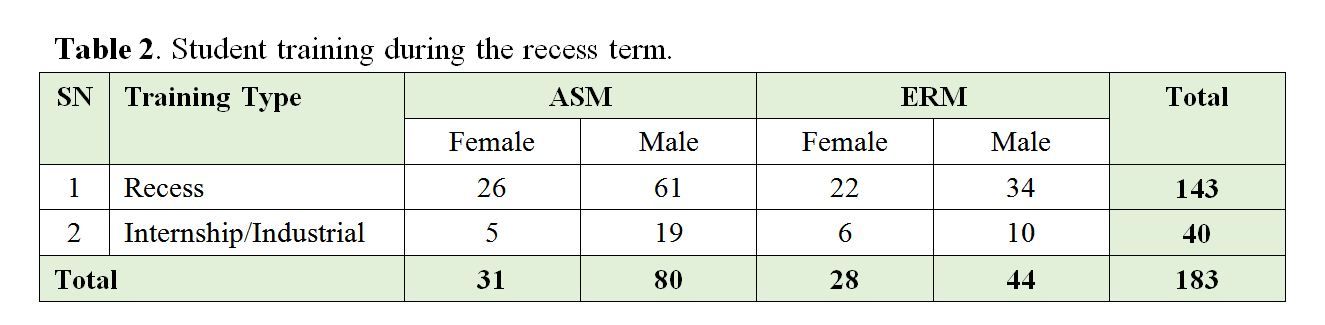
The Faculty of Agriculture and Environmental Science conducted 10 weeks of recess training during Academic Year 2024/2025 (AY 2024/2025), for 143 students (48 female, 95 male). In addition, the Faculty placed 40 students (11 female, 29 male) for industrial training with various partners. The details are presented in Table 2.
Trainings Attended
Training is one element of capacity building that focuses on providing specific skills address specific challenges. Capacity building helps in enhancing skills, knowledge, and abilities to empower staff to manage resources better and increase efficiency and productivity. Two (2)members of staff in the Faculty of Agriculture and Environmental Science attended training during FY 2024/2025 (Table 3).
Table 3. Trainings attended by staff in FAES during FY 2024/2025.
S/N | Name | Title of Training | Institution | Date | Duration |
|---|---|---|---|---|---|
1 | Dr. Alex Abaca | Uganda Science Leadership Program under the African Science Leadership Program | Uganda Virus Research Institute, Entebbe Uganda | 22-25 April/May 2025 | 4 days |
2 | Mr. Moses Okello | Plant Genomic Editing. Facilitated by The VIB-International Plant Biotechnology Outreach (VIB-IPBO) and Ghent University | Ghent University, Belgium | 5-13 June, 2025 | 9 days |
Conferences, Workshops, and Meetings Attended
Muni University provides opportunities for staff to attend conferences, workshops, and meetings related to their individual disciplines. Conference, workshops, or meetings attended by staff in the Faculty of Agriculture and Environmental Science during FY 2024/2025 are shown in Table 4.
Table 4.Conferences, workshops, ormeetings attended by staff in the Faculty of Agriculture an Environmental Science during FY 2024/2025.
S/N | Name | Title of Training | Institution | Date | Duration |
|---|---|---|---|---|---|
1 | Dr. Alfred Alumai | The 2nd RUFORM Triennial Conference | Windhoek, Namibia | August 2024 | 5 days |
2 | Mr. Denis Gobo | Gorilla Conference | Kampala, Uganda | December 2024 | 6 days |
3 | Mr. Richard Malingumu | REFOOTUREProject Work Package 3.1 Workshop on Nematodes | Nakuru, Kenya | February 2025 | 4 days |
4 | Dr. Robert Onzima | Collaboration Options among Freshnet Network Institutions and Ugandan Universities and Research Organization. World Aquaculture Safari 2025 | Boku, Vienna, Austria | May 2025 | 4 days |
5 | Ms. Sandra Langi | World Aquaculture Conference 2025 | Kampala, Uganda | May 2025 | 4 days |
Research Dissemination/Communication
Research dissemination and communication activities carried out by staff in FAES during FY 2024/2025 is presented in Table 5. The research was disseminated through either presentation at meetings/conferences or through publications in journals.
Table 5. Research dissemination/communication conducted by staff in the Faculty of Agriculture and Environmental Science during FY 2024/2025.
S/N | Name of Staff | Title of Presentation / Publication | Venue/Journal | Year | Role |
|---|---|---|---|---|---|
1 | Ms. Betty Nyangwire | Pleurotus ostreatus is a potential biological control agent of root-knot nematodes in eggplant (Solanum melongena). | Frontiers in Agronomy, 6, 1464111. DOI: 10.3389/fagro.2024.1464111 | 2024 | Author |
2 | Dr. Alfred Alumai | Pleurotus ostreatus is a potential biological control agent of root-knot nematodes in eggplant (Solanum melongena). | Frontiers in Agronomy, 6, 1464111. DOI: 10.3389/fagro.2024.1464111 | 2024 | Co-author |
3 | Mr. Denis Gobo | Influence of attitudes on adoption of renewable energy interventions among refugees and host communities in Terego District. | Gorilla Conference | 2024 | Presenter |
4 | Mr. Samuel Erima | Molecular characterisation of Fusarium species causing common bean root rot in Uganda. | Journal of Fungi 2025, 11, 283. Available at https://doi.org/10.3390/jof11040283 | 2025 | Author |
5 | Dr. Robert Onzima | Muni University Research and Graduate Progams on Freshwater Ecosystems | World Aquaculture Safari 2025, Boku, Vienna, Austria | 2025 | Presenter |
6 | Dr. Paul Bogere | Porcine reproductive and respiratory syndrome virus transmission among smallholder pig farms in western Uganda. | Preventive Veterinary Medicine. Available at: https://doi.org/10.1016/j.prevetmed.2025.106590 | 2025 | Co-author |
7 | Dr. Brian Tainika | Effects of strain, perch and nesting area inclusion or exclusion on performance, egg quality traits, and welfare in laying hens housed in enriched cage system. | Journal of the Hellenic Veterinary Medical Society, 76(1), 8883-8898. https://dir.muni.ac.ug/handle/20.500.12260/748 | 2025 | Co-author |
8 | Ms. Sandra Langi | Exploring governance dynamics in the aquaculture sectors in Uganda and Zambia using the aquaculture governance indicators (AGI) framework. | World Aquaculture Conference 2025, Munyonyo, Kampala, Uganda | 2025 | Presenter |
Consultancy Services
The Faculty of Agriculture and Environmental Science did not conduct any consultancy services related to their respective disciplines during FY 2024/2025.
Collaborations and Partnerships
Muni University’s mission is to provide quality education, generate knowledge, promote innovations, and empower communities for transformation. In this regard, Muni University works in collaboration with various partners to achieve this mission. During FY 2024/2025, the Faculty of Agriculture and Environmental Sciencehad collaborations and/or partnerships with the list presented in Table 6.
Table 6. Collaborations and partnership engagements by FAES during FY 2024/2025.
S/N | Partner | Area of collaboration | Lead Partner | Duration |
|---|---|---|---|---|
1 | Gulu University | Research and grant-seeking | Gulu University | Open |
2 | Makerere University | Research and grant-seeking | Makerere University | Open |
3 | Lira University | Research and grant-seeking | Muni University | Open |
4 | Maasai Mara University (Narok, Kenya) | Research and grant-seeking | Maasai Mara University | Open |
5 | Boku University (Boku, Vienna, Austria) | Research and training | Boku University | Open |
6 | Ghent University (Ghent, Belgium) | Research, grant-seeking, and training | Ghent University | Open |
7 | Wageningen University and Research (Wageningen, The Netherlands) | Research and grant-seeking | Wageningen University and Research | Open |
8 | Abi Zonal Agricultural Research and Development Institute | Research, grant-seeking, and training | Muni University | Open |
9 | Adraa Agriculture College | Research and training | Muni University | Open |
10 | PALM Corps | Research and training | Muni University | Open |
11 | ForAfrika | Research and training | ForAfrika | Open |
12 | International Institute for Tropical Agriculture | Training | Muni University | Open |
13 | National Cereal Crops Resources Institute | Training | Muni University | Open |
14 | National Genetic Resources Improvement Centre | Training | Muni University | Open |
15 | Arua Organic Farm | Training | Muni University | Open |
16 | Wole Mixed Farm | Training | Muni University | Open |
17 | Omia Agribusiness | Training | Muni University | Open |
Community Engagement
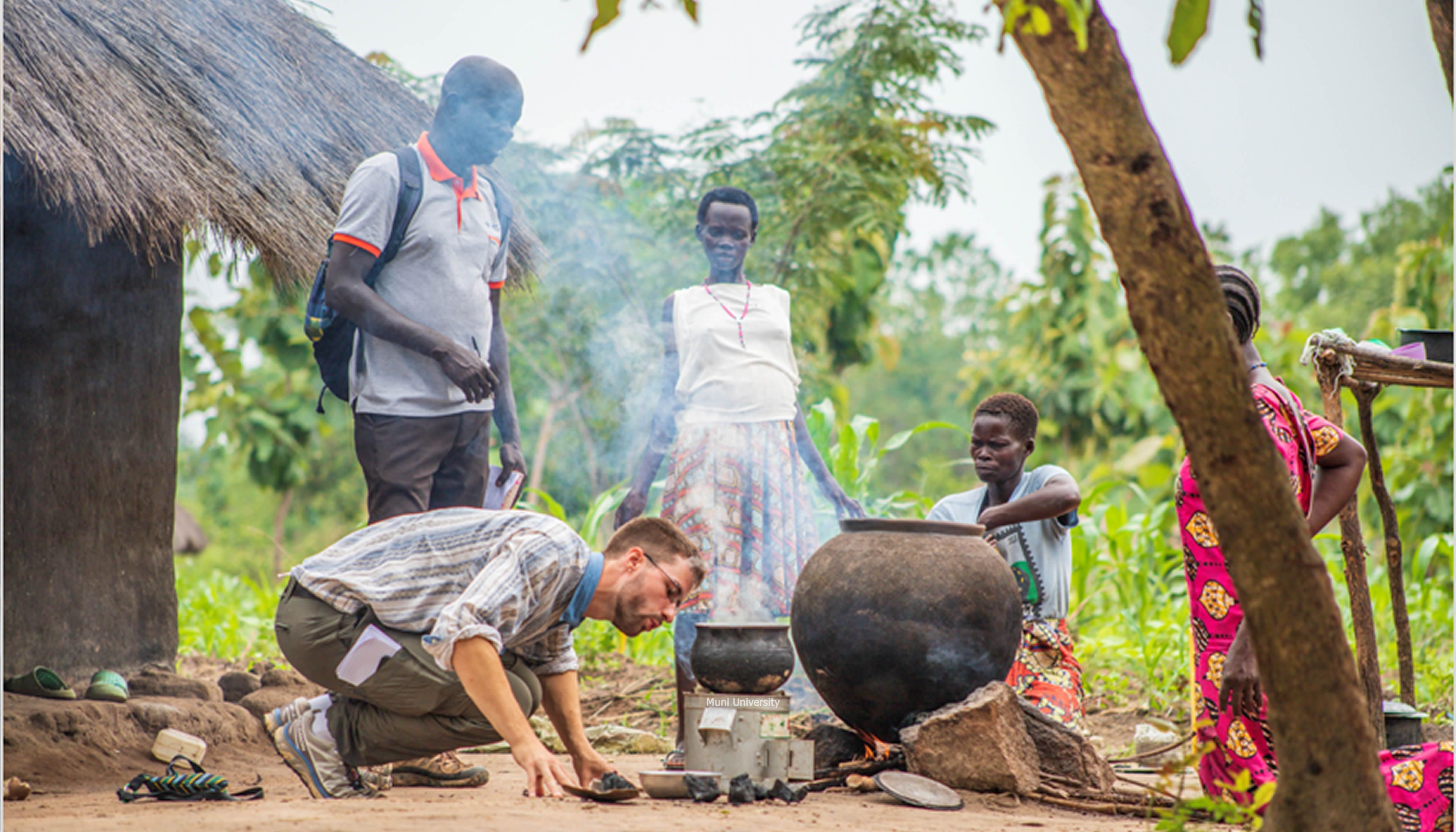
The Faculty he project, the faculty participated in organising the AMUTI Transdisciplinary Summer School in collaboration with PALM Corps and the University of Natural Resources and Life Sciences, Vienna (BOKU) with support from the Austrian Development Agency. The summer school brought together10 Masters’ students from Muni University and 10 from BOKU who will engage in a variety of learning formats. The summer school was facilitated by PhD students, staff from the Faculty of Agriculture and Environmental Science and BOKU. The Summer school was organised in two parts: the online preparatory lectures took place from 17th April to 2nd June 2025, while the field part took place from 5th to 19th July 2025 at Muni University in Arua and at PALM Corps Innovation Centre in Rhino Camp Refugee Settlement, Terego District. A key component of the program was a field stay in Rhino Camp Refugee Settlement, where students interacted with refugee and host community members to gain practical insights into local experiences with natural resource governance, energy use, farming practices, and soil and water conservation practices.
Also, the Faculty engaged in two (2) other community engagement activities during the reporting period. These activities are presented in Table 7.
Table 7. Community engagement by the Faculty of Agriculture and Environmental Science during FY 2024/2025.
S/N | Name | Community Engagement | Venue | Date | Participant |
|---|---|---|---|---|---|
1 | Dr. Alfred Alumai | Training on Introduction to Nematodes | Zombo District | May 2025 | Approx. 30 farmers |
2 | Dr. Alex Abaca Ms. Harriet Orodriyo Ms. Betty Nyangwire | Sensitization on water preservation and conservation in banana-legume intercropping system for climate change mitigation and adaptation | Koboko and Zombo districts | May 2025 | Approx. 40 farmers |
3 | Assoc. Prof. Clement Okia Dr. Philip I. Omwene Ms. Sandra Langi Mr. Denis Gobo | AMUTI Transdisciplinary Summer School | Muni University and Rhino Camp | April, June, and July 2025 | Approx. 25 participants |
Staff of the Faculty of Agriculture and Environmental Science
The Faculty of Agriculture and Environmental Science currently has 36 members of staff. Of these, 9 (25%) female and 27 (75%) are male. The staff contribute to the teaching and learning, research and innovation, and community engagement mandate of Muni University (Table 8).
Table 8.Members of staff in the Faculty of Agriculture and Environmental Science, FY 2024/2025.
S/N | Name | Gender | Qualification | Discipline | Rank |
|---|---|---|---|---|---|
1 | KAJOBE, Robert | M | PhD | Agroforestry and Apiculture | Research Professor |
2 | OKIA, Clement Akais | M | PhD | Agroforestry | Associate Professor |
3 | ALUMAI, Alfred | M | PhD | Entomology | Senior Lecturer |
4 | ABACA, Alex | M | PhD | Plant Breeding | Lecturer |
5 | ONZIMA, Robert Boyle | M | PhD | Breeding and Genetics | Lecturer |
6 | OMWENE, Philip Isaac | M | PhD | Water and Environmental Engineering | Lecturer |
7 | TAINIKA, Brian | M | PhD | Animal Production and Technologies | Lecturer |
8 | OSINDE, Cyprian | M | PhD | Botany and Plant Physiology | Lecturer |
9 | MUKIIBI, Alex | M | PhD | Soil Science | Lecturer |
10 | OCHAGO, Robert | M | PhD | Agricultural Extension and Innovations | Lecturer |
11 | ALIOMA, Richard | M | PhD | Agricultural Sciences | Lecturer |
12 | BUULE, David | M | MSc | Animal Nutrition | Lecturer |
13 | NAIGAGA, Hellen | F | MSc | Agroecology and Food Systems | Lecturer |
14 | ERIMA, Samuel | M | MSc | Crop Protection | Lecturer |
15 | OPITO, Emmanuel Abwa | M | MSc | Land Use and Regional Development Planning | Lecturer |
16 | GIDONGO, Halasi Zech | M | MSc | Agricultural Economics | Assistant Lecturer |
17 | GOBO, Denis | M | MSc | Agricultural Extension | Assistant Lecturer |
18 | MALINGUMU, Richard | M | MSc | Soil Fertility and Plant Nutrition | Assistant Lecturer |
19 | RWOTONEN, Innocent Bob | M | MSc | Horticulture | Assistant Lecturer |
20 | NABULIME, Maureen Norah | F | MSc | Agricultural Engineering | Assistant Lecturer |
21 | LANGI, Sandra | F | MSc | Fisheries and Aquaculture | Assistant Lecturer |
22 | NYANGWIRE, Betty | F | MSc | Nematology | Assistant Lecturer |
23 | BOGERE, Paul | M | MSc | Animal Nutrition | Assistant Lecturer |
24 | OKELLO, Moses | M | MSc | Plant Breeding and Biotechnology | Assistant Lecturer |
25 | OGWANG, Francis | M | MSc | Soil Science | Assistant Lecturer |
26 | ASERU, Gloria | F | MSc | Irrigation Engineering and Management | Assistant Lecturer |
27 | NABAASA, Hillary | M | MSc | Environment and Natural Resources | Assistant Lecturer |
28 | ODUR, Solomon | M | MSc | Clinical Epidemiology and Biostatistics | Assistant Lecturer |
29 | ORIBA, Alice | F | MSc | Plant Breeding and Seed Systems | Crop Production Officer |
30 | NAMUBIRU, Mastula | F | MSc | Preventive Veterinary Medicine | Animal Production Officer |
31 | NASSAZI, Dorcus | F | BSc | Botany | Laboratory Technician |
32 | ORODRIYO, Harriet | F | BSc | Plant Breeding and Seed Systems | Forestry Technician |
33 | EDEMA, Hilary | M | MSc | Bioinformatics and Biotechnology | Laboratory Technician |
34 | WADRI, Victor | M | BSc | Soil Science | Laboratory Technician |
35 | OBINA, Patrick | M | BSc | Agricultural Mechanization and Irrigation Engineering | Laboratory Technician |
Innovation
Iron-rich and Zinc-rich Beans
Uganda is faced with high rates of malnutrition partly brought by hunger as result of climatic change. The bean project will enhance the nutritional composition of the common bean (Phaseolus vulgaris, L), through bio-fortification as an option to address the prevalence of mineral nutrient deficiency (MND) and malnutrition.A wide assembly of germplasm, from various genetic backgrounds,including Zambian (landraces and commercial), Brazilian (EMBRAPA), and Colombian (CIAT core collection) varieties, are being evaluated in in five (5) locations (Arua, Hoima, Kabale, Bukomasimbi, Mayuge districts), together with participatory variety selection (PVS) in two (2) locations (Zeu Sub County in Zombo District and Oyam Town Council in Oyam District). These trials sites are aimed at validating yields and yield-related parameters, pests and disease reisistance, and farmers’ preference of the new breeding lines.
Vitamin A-rich Banana
Field experiments on eighteen (18) lines of vitamin-rich banana that were established at Adraa Agricultural College, in Madi Okollo District. The 18 lines are undergoing field evaluation for climate-resilience, yield, pests and disease resistance, soil health and soil organic matter content, and carbon sequestration. From these lines, 9 have been selected for location-specific trials in Zeu Sub County in Zombo Districtfor scaling up. In addition, laboratory analysis will be conducted to determine their beta carotene levels, nutritional content, and biochemical content of the banana lines in both locations.
Rice Varieties
Over 1,000 rice accessions comprised of varieties, breeding lines, magic populations, and elite lines have been introduced at Muni University from the Africa Rice Centre, in West Africa. Of these, 8 breeding lines have been selected and are being evaluated in Kabanyolo (Makerere University) and at Muni University for biotic stress (rice blast and bacterial blight), abiotic stress (drought), and qualitative traits (aroma and grain quality). In addition, research is being conducted to produce more breeding populations aimed at releasing new rice varieties.
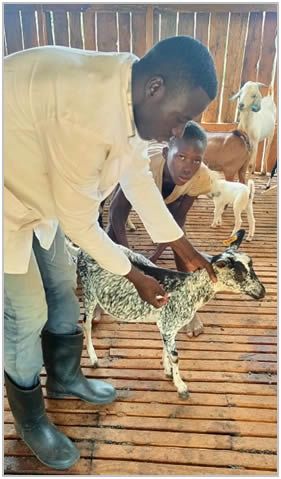
Community-Based Breeding Program (CBBP) for Goats
A community-based goat breeding program has been established in Madi Okollo, comprising breeding stock of Savanna bucks, Galla bucks and does, and indigenous goats (local East African) goats. The goats are being assessed for development of a central nucleus herd for goat local goat herd breed improvement.